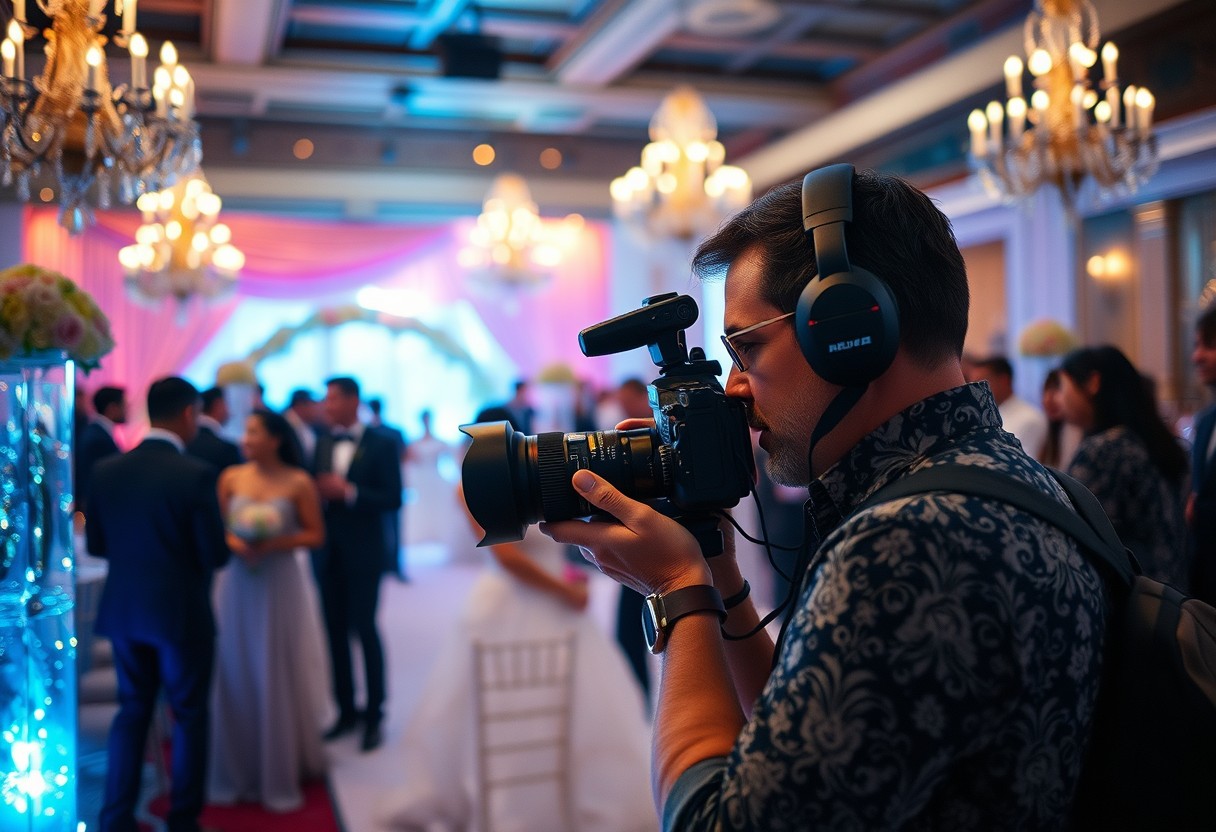

Why Event Photography Matters
Event photography preserves memories, communicates a brand story, and drives social buzz. From a bride’s tear at the altar to a CEO’s keynote handshake, these are moments that matter. Good event photographers don’t just record; they interpret. They choose what to emphasize, which moments to linger on, and how to present a narrative that resonates.
Gear Essentials for Event Photography
Camera bodies and lenses
Full-frame cameras excel in low light and give a shallow depth-of-field look many clients love. Cropped sensors work too if you know their limits. Key lenses: a fast standard zoom (24–70mm f/2.8), a telephoto zoom (70–200mm f/2.8), and a fast prime (35mm or 50mm f/1.4–f/1.8).
Flash and lighting tools
On-camera flash can be harsh—use a diffuser or bounce card. For better control, use off-camera flash or a speedlight with a small softbox. A compact LED panel helps for behind-the-scenes continuous light.
Accessories: batteries, cards, straps
Bring two bodies if possible, several charged batteries, multiple memory cards, a comfortable strap, and a tool kit (lens cloth, Allen keys, gaffer tape). Redundancy is non-negotiable.
Pre-Event Preparation
Scout the venue
Visit ahead or request venue photos. Identify prime shooting spots, power sources, and obstacles. Note sunlight direction and ambient light sources to plan your shots.
Shot list and timeline
Create a flexible shot list with “must-have” and “nice-to-have” images. Sync with the event schedule so you’re in the right place at the right time, but stay ready for surprises.
Communication with clients and organizers
Clarify deliverables, turnaround, image usage rights, and “no-go” areas. Let event staff know who you are—this reduces friction and improves access to angles.
Mastering Exposure and Settings
ISO, Shutter Speed, Aperture
ISO: Raise when needed but know your camera’s noise limits. Shutter speed: Aim for at least 1/125s for handheld candids; increase for fast action. Aperture: Wider apertures (f/1.8–f/2.8) for subject separation; stop down (f/4–f/8) when you need more depth.
Shooting in low light
Low light is the battleground of event photographers. Use fast lenses, steady stance, raise ISO carefully, and employ off-camera flash when possible. Embrace noise reduction in post—better a grainy keeper than a blurry miss.
Composition and Storytelling
Candid vs posed
Candid shots feel authentic; posed shots provide polish. Mix both. For candids, blend in, anticipate, and use burst mode. For posed group shots, use a diffuser or bounce flash for flattering light.
Using leading lines & framing
Use architecture, staircases, and tables to lead the viewer’s eye. Frame subjects through doorways or between people to create depth and context.
Capturing emotions and decisive moments
Be ready for split-second expressions: laughter, tears, glances. Those are the photos people keep. Pre-focus likely zones and use continuous AF when action is unpredictable.
Working with Light
Natural light strategies
If you have windows or golden-hour outdoor time, position subjects for side or backlight for a cinematic feel. Use reflectors to gently fill shadows.
Off-camera flash and modifiers
Off-camera flash allows intentional modeling of light. Speedlights with softboxes or umbrellas give flattering light. Use TTL for speed and manual for consistent results.
Shooting Techniques for Different Event Types
Weddings
Weddings require documentary candids, formal portraits, and detail shots. Anticipate ceremony highlights and — where possible — bring a second shooter. Prioritize emotion and narrative flow.
Corporate events
Corporate work needs clean composition and consistent color. Capture speakers, networking, and branded elements. Be ready to provide quick on-the-spot headshots with a portable light setup.
Concerts & performances
Fast lenses and high ISO capability are essential. If flash isn’t allowed, rely on prime lenses and technique. Freeze gestures or try creative motion blur to convey atmosphere.
Workflow: From Capture to Delivery
File management & backup
Label folders by event/date/client. Back up to two separate drives before clearing cards. Keep a consistent naming convention for easy retrieval.
Editing and color grading
Develop a consistent editing style. Start with exposure, white balance, and noise reduction. Preserve skin tones—these are the human touchpoint of event images.
Client delivery and rights
Decide on file formats to deliver and be explicit about licensing: social, commercial, and print rights. Use a client gallery for downloads and print orders.
Common Mistakes and How to Avoid Them
Avoid under-preparation, poor backup practices, relying solely on on-camera flash, and weak communication. The fixes: plan, test gear, shoot RAW, and keep communication clear with clients/vendors.
Building Relationships and Professionalism
Arrive early, stay calm under pressure, be polite to staff and guests, and deliver on promises. Follow-up emails and quick previews build goodwill and referrals.
Pricing, Packages, and Licensing Basics
Price based on hours, post-production, equipment, and usage. Offer tiered packages (basic, standard, premium) and add-ons (second shooter, prints, rush delivery). Use clear contracts to avoid disputes.
Growing Your Portfolio and Brand
Share curated highlights on your website and social media with captions that tell the story behind the shot. Network with planners and venues and consider mini-sessions to expand portfolio variety.
Conclusion
Event photography blends preparation, technical skill, and emotional intelligence. Get your gear right, rehearse the basics, learn to read light, and practice anticipation. Focus on storytelling and relationships as much as on pixels and presets, and your images will do more than document — they’ll cement memories.
FAQs
Q1: What camera settings work best for event photography?
A1: There’s no single setting. Start with aperture priority to control depth-of-field, set ISO according to light (keeping noise in mind), and pick a shutter speed fast enough to prevent blur. Know your camera’s sweet spot.
Q2: How do I capture candid moments without being intrusive?
A2: Blend in, use a longer lens from a distance, or position yourself where natural interactions happen. Anticipation and patience are key—don’t force moments; be ready for them.
Q3: Is flash always necessary at events?
A3: Not always. Use flash to shape or fill light when ambient light is insufficient. Natural light often looks better, so choose based on mood and venue rules.
Q4: How many backup drives should I use?
A4: Use at least two backups—one local (portable SSD) and one offsite or cloud backup. Back up immediately after the event; never rely on a single copy.
Q5: How do I price my event photography services?
A5: Base pricing on on-site time, post-production time, experience, and usage rights. Research local rates and present tiered packages to fit client budgets.
Discover expert photography guides, tips, and inspiration at CameraTale.com. Perfect your skills and capture moments like a pro.